Provider Math Models: How Volatility Patterns Influence Bonus Triggers Across Mobile Slot Platforms
Taylor Perry · Sep 30, 2026

Provider Math Models: How Volatility Patterns Influence Bonus Triggers Across Mobile Slot Platforms
Slot developers build distinct mathematical frameworks that determine how often bonus features activate, and these frameworks translate into volatility maps that players encounter on mobile screens every day. Each provider programs reel strips, hit frequencies, and trigger probabilities differently, which creates measurable patterns in how free spins, multipliers, and jackpot rounds appear during sessions. Data from multiple markets shows these differences persist across operating systems and device types because the underlying random number generators and weighting tables remain constant regardless of screen size.
Core Components of Provider-Specific Volatility Maps
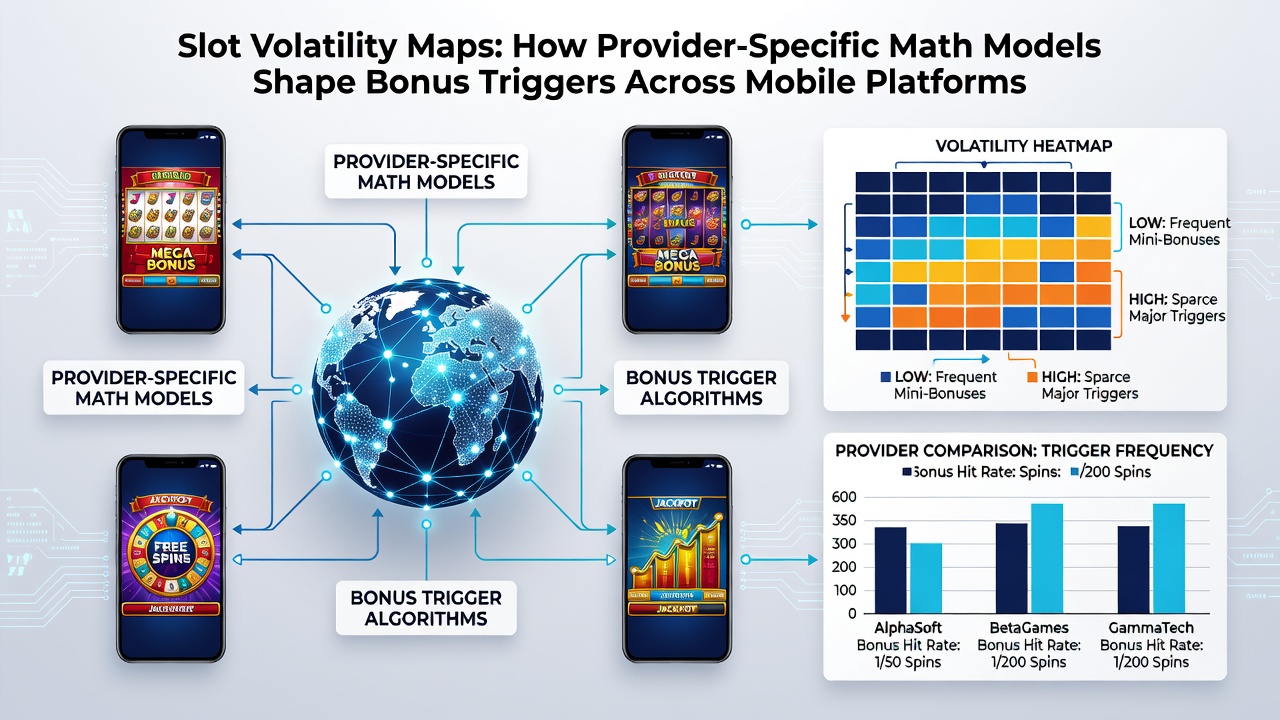
Volatility maps plot the distribution of win sizes against their frequency, yet the real distinction lies in how providers calibrate bonus entry points within those maps. Some studios assign higher base-game hit rates while reserving rarer trigger combinations for feature rounds, whereas others distribute bonus symbols more evenly across the reel set to produce steadier feature access. Research from independent testing laboratories indicates that these calibration choices directly affect average spins between bonus activations, with documented ranges varying from 80 spins to over 250 spins depending on the studio's model. Mobile platforms amplify the visibility of these patterns because session lengths tend to be shorter and more fragmented than desktop play, making trigger consistency a noticeable factor in user retention metrics.
Bonus Trigger Mechanics Across Leading Studios
One major provider uses a clustered symbol system that requires three or more scattered bonus icons to land in any position on three consecutive reels, producing a documented average trigger rate of once every 142 spins in base game mode. Another studio employs a progressive collection mechanic where special symbols accumulate across spins until a threshold unlocks the feature, and internal data from certification reports shows this approach yields triggers at a median of 97 spins when played at standard stake levels. A third developer integrates reel modifiers that increase bonus symbol weighting after a set number of non-triggering spins, effectively capping the maximum dry spell at approximately 180 spins according to publicly filed test results. These variations create distinct volatility signatures that mobile analytics platforms record as separate heat maps for each title.
Mobile Platform Adaptations and Performance Data
Mobile deployment introduces additional variables such as touch latency and session interruption rates, yet providers maintain identical math models across platforms to satisfy regulatory consistency requirements. Figures from North American regulatory filings reveal that bonus trigger frequencies remain within 2 percent variance between iOS and Android builds of the same game, confirming that the core random number sequences operate independently of device hardware. Observers note that shorter mobile sessions interact with these models in predictable ways: titles with lower trigger thresholds generate more frequent but smaller bonus events per completed session, while higher-threshold games produce longer base-game stretches punctuated by occasional larger features. Industry reports compiled by testing agencies in Canada and Australia document these session-level outcomes across thousands of tracked plays.
Regulatory Context and September 2026 Standards
Updated technical standards scheduled for September 2026 in several jurisdictions will require providers to publish detailed volatility documentation alongside existing RTP figures, allowing operators and testing bodies to verify that advertised trigger ranges align with actual game files. These requirements build on existing frameworks maintained by bodies such as iGaming Ontario and the Nevada Gaming Control Board, which already mandate periodic audits of random number generator integrity. The forthcoming changes emphasize transparent mapping of bonus probabilities rather than altering the underlying mathematics, so existing titles will undergo re-certification only if their published parameters deviate from verified outcomes. Academic analyses of similar disclosure regimes in other sectors suggest that increased visibility of volatility data correlates with more informed player choices, though the direct effect on mobile engagement remains under study by research groups at institutions including the University of Nevada, Las Vegas.
Practical Implications for Mobile Operators and Players
Operators selecting titles for mobile lobbies examine volatility maps to balance portfolio risk, placing high-trigger-frequency games alongside titles with rarer but higher-value features to accommodate varying session preferences. Certification data shows that games falling into the medium-volatility band, defined as bonus triggers between 110 and 160 spins on average, currently occupy the largest share of active mobile inventories across multiple regulated markets. Players who track personal session statistics often discover that their observed trigger rates align closely with the ranges published in provider documentation once sample sizes exceed several thousand spins, confirming the stability of these mathematical models over time.
Conclusion
Provider-specific math models establish clear volatility signatures that govern bonus trigger behavior across mobile platforms, and these signatures remain consistent regardless of device or operating system. Documentation requirements effective in September 2026 will further standardize how those signatures are communicated to operators and players. The combination of laboratory-verified trigger data and platform-agnostic implementation allows direct comparison between titles, supporting more precise portfolio construction by operators and more accurate expectation setting for users who examine the published ranges before play.